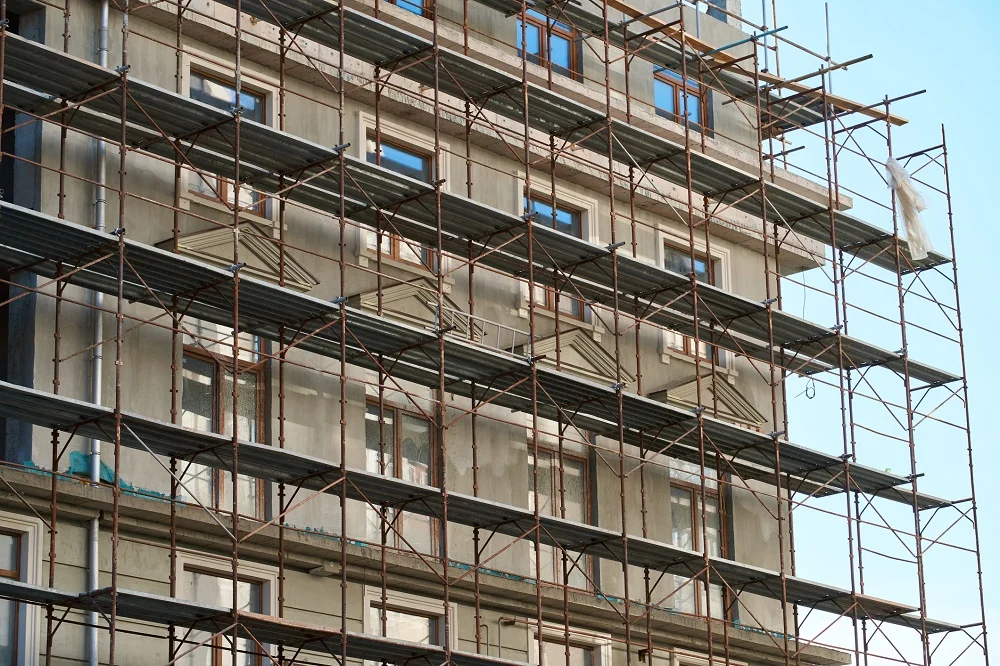
Spain has the second-highest percentage of apartment buildings in Europe: around 65% of Spaniards live in multi-family dwellings. Only Latvia (66%) has a higher percentage, and this is well above the European average of 48%, according to Eurostat. Of these buildings, four out of five are inefficient because they consume more energy than they actually need. This is due to poor insulation and energy efficiency. In fact, housing is the third-largest source of CO2 emissions , surpassed only by industry and transportation.
Energy efficiency, an unfinished task
However, a shift in trends is beginning to emerge, and Spanish homeowners are demanding more sustainable housing. 85% would invest in improving their home's energy efficiency. Furthermore, more than half (50.2%) would propose renovations at their homeowners' association meeting, according to a perception survey we conducted.
Despite this growing interest, there is still a significant lack of awareness regarding the mechanisms available for these improvements. Our report reveals that 84% of the homeowners surveyed are unaware that part of the Next Generation EU funds will be allocated to home renovations. Furthermore, 77% are unaware of the existence of specific financing options for homeowners' associations wishing to improve their properties.
What is the RER Plan?
To address this inefficiency in Spanish buildings, UCI will launch the RER (Residential Energy Rehabilitation) plan . This is a one-stop shop system for homeowners' associations, providing technical assistance for conducting energy assessments and offering financial support for applying for grants and carrying out rehabilitation work.
Homeowners' associations that benefit from this program will have the opportunity to improve the energy efficiency of their building, as well as thermal and acoustic comfort , with advantageous financing conditions and increase the value of their homes in economic and comfort terms.
This program will allow the rehabilitation of at least 3,720 homes located in the cities of Madrid (1,320), Barcelona (1,320), Valencia (540) and Seville (540), with the aim of reducing total energy consumption by 50% on the average final energy savings.
For the development of this ambitious plan, at UCI we have the support of the European Commission and the European Investment Bank (EIB), which has allocated 2.6 million euros from the European Local Energy Assistance ( ELENA ) program.
6 steps to benefit from the RER Plan
The RER Plan and its one-stop shop model consist of six simple steps. These steps will help homeowners' associations interested in improving energy efficiency. This assistance generally involves analyzing their situation, undertaking their projects, and accessing available financing and subsidy mechanisms.
1. Property selection: Homeowners' associations can decide for themselves whether to renovate their building. Furthermore, the RER plan will use technological resources, such as AI (Artificial Intelligence), to assess a property's renovation potential and determine what improvements it would require.
2. Proposal and work plan: this involves technically evaluating the building and having an initial report
of the specific reforms to improve accessibility and energy efficiency. Following this report, a project plan outlining the works to be carried out and their cost is presented free of charge.
3. Financing proposal and calculation of subsidies: after the previous phase where the technical rehabilitation actions are determined, this proposal includes the financial information, with the public subsidies that the community of owners could opt for according to the type of reform and the financing total.
4. Approval: At this point, three offers from companies specializing in building renovations are recommended, which may also include suggestions from the Property Manager and the owners, who are the ones who will ultimately select the renovation company.
5. Monitoring: the RER program will be responsible for monitoring the rehabilitation works, as well as obtaining the certificate of completion and compliance with the energy saving objectives to justify the subsidies.
6. Receiving aid: once the rehabilitation work has been completed and the energy improvement has been justified, the community of owners will receive the corresponding subsidy, which they can use to repay part of the renovation loan.
A boost for energy savings in the home
The RER plan will mobilize investments of 46.5 million euros until 2024 for the improvement of energy efficiency and the use of renewable energy sources in residential buildings with improvements for the modernization of existing residential buildings; from insulation to improvements of the envelope (walls, roofs and floors), window replacements and glazing improvements, heating, cooling and ventilation, interior lighting and installation of renewable energy solutions, such as photovoltaic panels.
In general terms, our experts estimate that the project will result in energy savings of up to 8.1 GWh. This represents a 50% reduction in initial consumption and a reduction of up to 1,765 tons of CO2 per year.


