Climate change is significantly affecting water availability worldwide, and Spain is no exception.
Although we live in a country with abundant water resources, many of them are at risk due to a lack of rain or the management of available resources, which has led to a decrease in the flow of rivers and aquifers, affecting ecosystems and people.
Given this situation, it is essential to adopt measures to reduce water consumption in homes, as well as promote the use of devices and encourage habits that allow saving water, also known as blue gold.
How much water do households consume?
According to the statistics on Water Supply and Sanitation prepared by the INE (National Institute of Statistics), each Spanish household consumes an average of 133 liters of water per day per inhabitant, a figure that jumps to 265 liters if we use data from the European Environment Agency.
In fact, according to the Aquae Foundation, two-thirds of the water consumed by households is used in the bathroom (73%), while 19% corresponds to the kitchen and 8% to other domestic uses.
In the bathroom, the shower or bathtub accounts for a third of water consumption (34%), followed by the toilet (21%) and the sink (18%). The washing machine accounts for 10% and the dishwasher for 5%.
Translating these percentages into everyday activities, this same foundation points to the following consumption in liters.
| Activity | Consumption in liters |
| Wash the clothes | From 60 to 100 liters |
| Cleaning at home | From 15 to 40 liters |
| Wash the dishes by hand | 100 liters |
| Wash the dishes in the dishwasher | From 18 to 50 liters |
| Cook | 6 to 8 liters |
| Take a shower | From 35 to 70 liters |
| Take a bath | From 150 to 200 liters |
| Brush your teeth with the tap turned off. | 1.5 liters |
| Brushing your teeth with the tap running. | 30 liters |
| Wash the car with a hose | More than 500 liters |
| Wash your hands | 1.5 liters |
| Flush the toilet cistern | 10 to 15 liters |
| Flush half a toilet | About 6 liters |
| Watering a small garden | 75 liters |
| Plant watering | 15 liters |
| Drink | 1.5 liters |
Devices to reduce water consumption in homes
Currently, there are devices that can help us reduce water consumption in homes, such as flow regulators, aerators, and dual-flush toilets. Discover how each one works.
- Flow regulators: These are devices installed on faucets that reduce the water flow. This allows you to save a significant amount of water without a large investment, as they are inexpensive and easy to install.
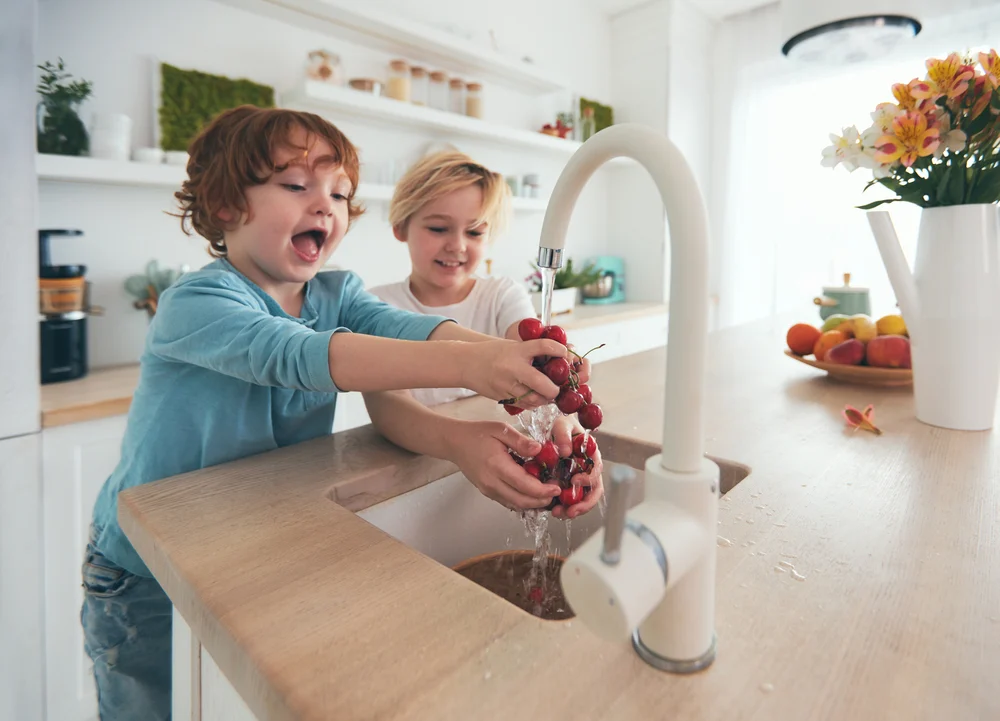
- Aerators: Like the previous ones, these are installed on faucets. These devices mix water with air to reduce the amount of water that comes out of the tap without lowering the pressure. They are especially useful in the kitchen because they allow you to save water when washing dishes or cleaning vegetables, for example.
- Dual flush toilets or cisterns: these are toilets that are usually placed in the cistern and allow you to reduce water consumption thanks to two flush buttons: one for a reduced amount of water and another for a larger amount.
Habits to reduce water consumption in homes
Aside from the devices we can install in our homes, the best way to reduce water consumption is to adopt a series of truly effective habits. Which ones? Pay attention, many of them will probably sound familiar.
- Turn off the tap while you brush your teeth. This simple action prevents more than 30 liters of water from going down the drain unnecessarily. Imagine the savings if everyone in your family brushed their teeth three times a day. Quite a difference, isn't it?
- Shower instead of bathing: Hawaii and Mumbai are two paradises, but don't recreate them in your apartment like Mecano did in their song! Switching from baths to showers will allow you to save more than 100 liters of water.
- Use the washing machine and dishwasher only when fully loaded: maximizing the space in these appliances and running them with a full load will save a significant amount of water and energy. And it's even better if you use eco mode.
- Use rainwater to water your plants: Yes, we know that rain is scarce in many parts of the country, but don't forget this habit. Place a container on your patio or down the gutter to reuse rainwater for watering plants or potted plants.
- Reuse water: As with the previous point, a great way to save water is to reuse it. How? By using shower water to clean the floor or saving the water from washing vegetables to water houseplants.
- Repair water leaks: A water leak translates into a significant daily loss and increased bills. If you detect leaks or drips in your home, it's important to repair them as soon as possible to avoid unnecessary waste.
Houses with swimming pools. You can also save water.
If you live in a house with a pool, it's important to add some additional habits to those we suggested in the previous section. By doing so, you'll be part of the change, as well as reducing your water bills.
- Cover the pool: This is essential. During the winter and at night, one of the most effective ways to reduce water evaporation in your pool is to cover it with a tarp. This will also help maintain the water temperature.
- Don't empty your pool at the end of the season. It's advisable to prepare it for winter with specific products instead of wasting so much water.
- Control water levels: check that the water level in your pool is kept at the right point so that it doesn't lose water by overflowing or damage the pump by sucking in air.
- Use electric pool cleaners that do not consume water, unlike hydraulic ones.
- Repair leaks: We discussed this earlier, and in a swimming pool, leaks can represent a significant loss and even greater expense. If you notice your pool's water level decreasing, you likely have a leak.
- Clean the filters frequently: Your pool filters can accumulate a lot of dirt, reducing their effectiveness. Cleaning them regularly will prevent the pump from working harder than necessary, saving you water and energy.
- Use effective treatment systems. You'll find treatments on the market that allow you to keep your water clean without using too many chemicals (salt electrolysis, filters, etc.).
In conclusion, remember that the water situation in our country is becoming increasingly critical and that every drop counts. Therefore, it is essential that we all contribute to reducing water consumption in our homes by adopting small, simple habits and using economical devices.


