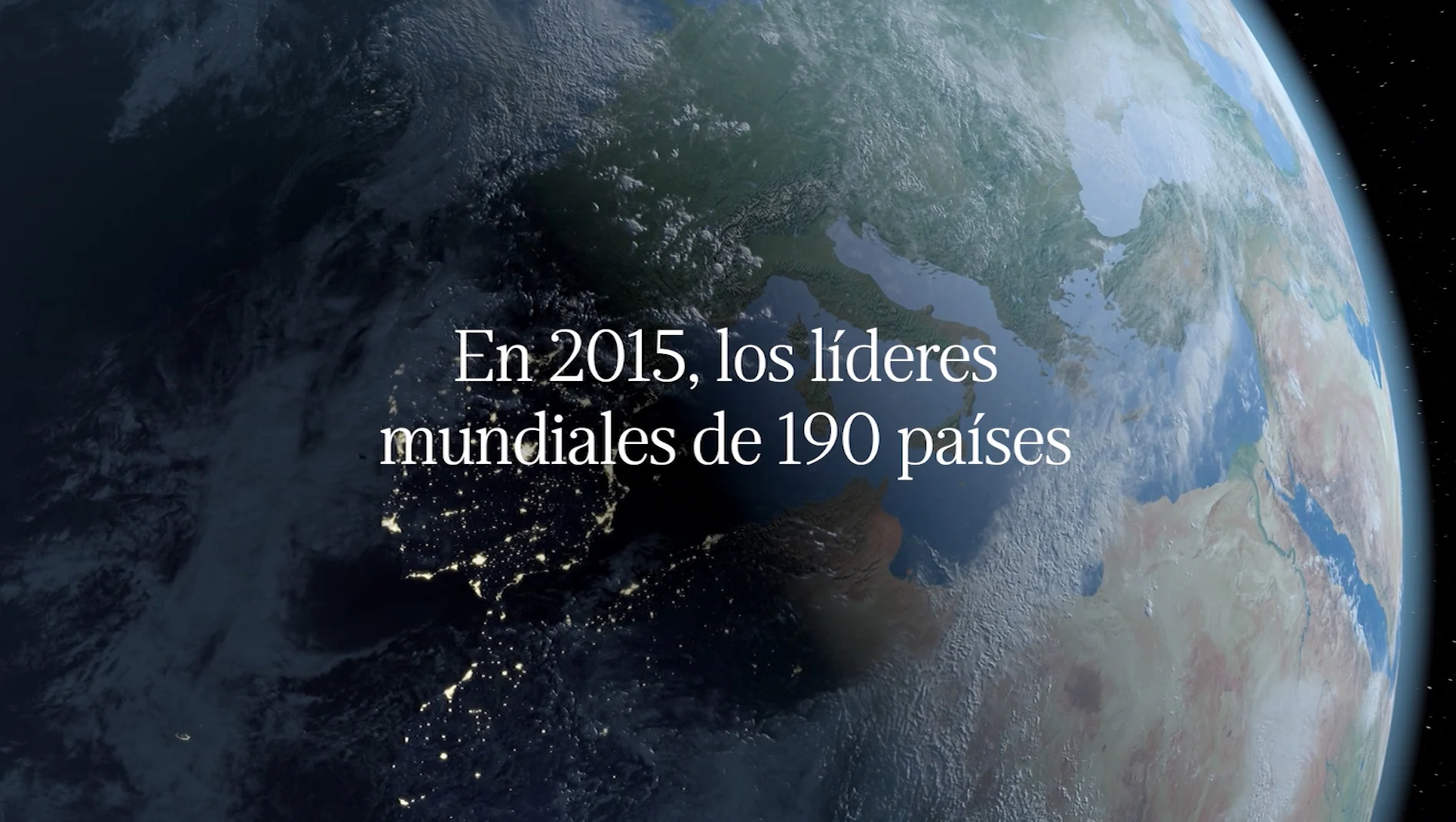
On September 25, 2015, 190 world leaders adopted a set of global goals to make our planet a fairer, more equitable, and more sustainable world, and to ensure a more prosperous future for all generations. Want to know what the Sustainable Development Goals are?
What are the Sustainable Development Goals?
The 17 Sustainable Development Goals are part of a new UN sustainable development agenda and comprise 169 specific targets that must be met by 2030. The next ten years are also known as the Decade of Action because solutions to these challenges need to be accelerated.
Achieving the SDGs requires the participation of governments, businesses, civil society, and individuals. Each SDG's targets have their own indicators, which measure progress to determine whether or not the goal is being met.
In total, these 17 SDGs encompass different areas such as the environment, society, and innovation. Below, we explain the purpose of each one:
Goal 1: End poverty
This SDG aims to end poverty in all its forms everywhere by 2030. The most affected countries, South Asia and Sub-Saharan Africa, account for around 70% of people living in extreme poverty. In addition, 30 million children grow up in poverty in the world's richest countries.
Goal 2: Zero Hunger
The goal is to end world hunger. Nearly 800 million people suffer from hunger, almost all of them in developing countries. To end this, food security and improved nutrition must be achieved, and sustainable agriculture must be promoted.
Goal 3: Health and Wellbeing
SDG 3 aims to ensure healthy lives and promote well-being for all at all ages.
Every year, more than 6 million children under the age of 5 continue to die. Ensuring healthy lives and promoting well-being for all at all ages is essential for building prosperous societies.
Goal 4: Quality Education
This goal focuses on ensuring inclusive, equitable and quality education and promoting lifelong learning opportunities for all.
Achieving this SDG is vital for many others to be met. Education is a fundamental element in reducing inequalities. It also empowers people worldwide to lead sustainable lives and fosters tolerance, which will allow for the creation of more peaceful societies.
Goal 5: Gender Equality
The purpose of SDG 5 is to achieve gender equality and empower all women and girls.
Women worldwide still earn 24% less than men in the labor market. The goal is to achieve gender equality and empower all women and girls.
Goal 6: Clean Water and Sanitation
SDG 6 aims to ensure the availability and sustainable management of water and sanitation for all
More than 40% of the world's population suffers from water scarcity. Ensuring its availability, responsible management, and sanitation for all is a human right.
Goal 7: Affordable and clean energy
Ensuring access to affordable, reliable, sustainable and modern energy for all – these are the main goals of SDG 7.
Energy is the factor that contributes to climate change and accounts for about 60% of all global greenhouse gas emissions.
Goal 8: Decent work and economic growth
SDG 8 promotes inclusive and sustainable economic growth, employment and decent work for all.
Eradicating poverty is only possible through stable, well-paying jobs. The number of jobs needed between 2016 and 2030 amounts to 470 million.
Goal 9: Industry, innovation and infrastructure
SDG 9 aims to build resilient infrastructure, promote sustainable industrialization and foster innovation.
Industry has a direct impact on employment, and therefore on economic growth and social development. Climate change also depends heavily on investment in infrastructure, which can lead to sustainable technological progress.
Goal 10: Reducing inequalities
This objective aims to reduce inequality within and between countries.
Inequalities threaten long-term social and economic development. Sustainable development cannot be achieved if we exclude any part of the world's population.
Goal 11: Sustainable Cities and Communities
Cities must become more inclusive, safe, resilient, and sustainable.
There are 828 million people living in slums, and this number continues to rise. This inequality, coupled with high levels of energy consumption and pollution in urban areas, is alarming.
Goal 12: Responsible production and consumption
This SDG aims to guarantee sustainable consumption and production patterns, as well as the prosperity of the planet. If the world's population reaches 9.6 billion people by 2050, maintaining our current lifestyle will require the equivalent of almost three planets.
Goal 13: Climate Action
SDG 13 aims to ensure that urgent measures are taken to combat climate change and its effects.
Humans are threatening our own way of life and the future of the planet with our actions. Climate change affects us all equally, which means we must act now.
Goal 14: Life Below Water
Its purpose is to conserve and sustainably use the oceans, seas and marine resources.
The oceans are a source of natural resources such as food, medicine, biofuels, and other products. Furthermore, marine protected areas contribute to poverty reduction by increasing incomes and improving people's health.
Goal 15: Life on Land
This SDG aims to promote the sustainable management of forests, combat desertification, halt and reverse land degradation, and stop biodiversity loss.
Forests cover almost 31% of our planet's surface. Around 1.6 billion people depend on forests for their livelihoods.
Goal 16: Peace, justice and strong institutions
This goal aims to promote just, peaceful, and inclusive societies. This SDG permeates the others. No one should live in fear of any form of violence, and everyone should feel safe throughout their life.
Goal 17: Partnerships to achieve the goals
The key to SDG 17 is to revitalize the Global Partnership for Sustainable Development.
If we want to achieve the SDGs, we must move now from commitment to action. We must all unite through strong, inclusive, and integrated partnerships at all levels.


