Our planet is increasingly threatened by the amount of waste we generate. Reverse logistics is one way to move from words to action to protect the environment.
What is reverse logistics?
Reverse logistics is a set of activities and processes that facilitate waste management so that it can be used or disposed of sustainably.
The European Working Group on Reverse Logistics ( REVLOG ) defined it in 2004 as “the operations related to the reuse of products and materials including all logistical activities of collection, unpacking and processing of materials, used products, and/or their parts, to ensure a sustained ecological recovery.”
Traditional logistics was responsible for getting the product to the point of consumption. Unlike this, reverse logistics gets the product from the customer back to the supplier. A good reverse logistics system is one that is based on the rule of the 'R's: recycle, reuse and reduce.
Environmental legislation
Reverse logistics is closely linked to environmental protection. New European regulations make producers responsible for the entire product lifecycle. Therefore, companies must provide support until their products become waste. But what is the reason for all these legislative changes?
Firstly, there is a growing concern for the environment and the planet. Europe is committed to the 2030 Agenda and, therefore, to the Sustainable Development Goals .
For changes to be effective, they must be supported by regulations. The European Union has established, among others, the following laws and regulations based on its Sixth Environment Programme:
- Directive (EU) 2018/852 of the European Parliament and of the Council of 30 May 2018 amending Directive 94/62/EC on packaging and packaging waste
- Directive 2012/19 of the European Parliament and of the Council of 4 July 2012 on waste electrical and electronic equipment (WEEE)
Secondly, in 2006 Germany, and in 2010 the other EU countries, established new regulations. Their objective is to require suppliers to be fully responsible for the reverse logistics of all waste and components generated by their products. This has a beneficial aspect for the company, which is that it opens a path for differentiation beyond its product.
Types of reverse logistics
Currently, a distinction is made between two types:
- Waste management : collection, recycling, and treatment of waste generated from the final product once it is sold. This action helps, on the one hand, to reduce the impact on the planet, and on the other, to ensure that items are reused to generate value again. This latter value can be in the form of raw materials, spare parts, etc.
- Regarding the product: when an item becomes obsolete, it follows a planned return process. During this process, a refund may or may not be issued.
The flow of the chain
Customer -> Originating company -> Recycling and disposal of parts -> Start of a new production cycle. The following actors are involved in this flow:
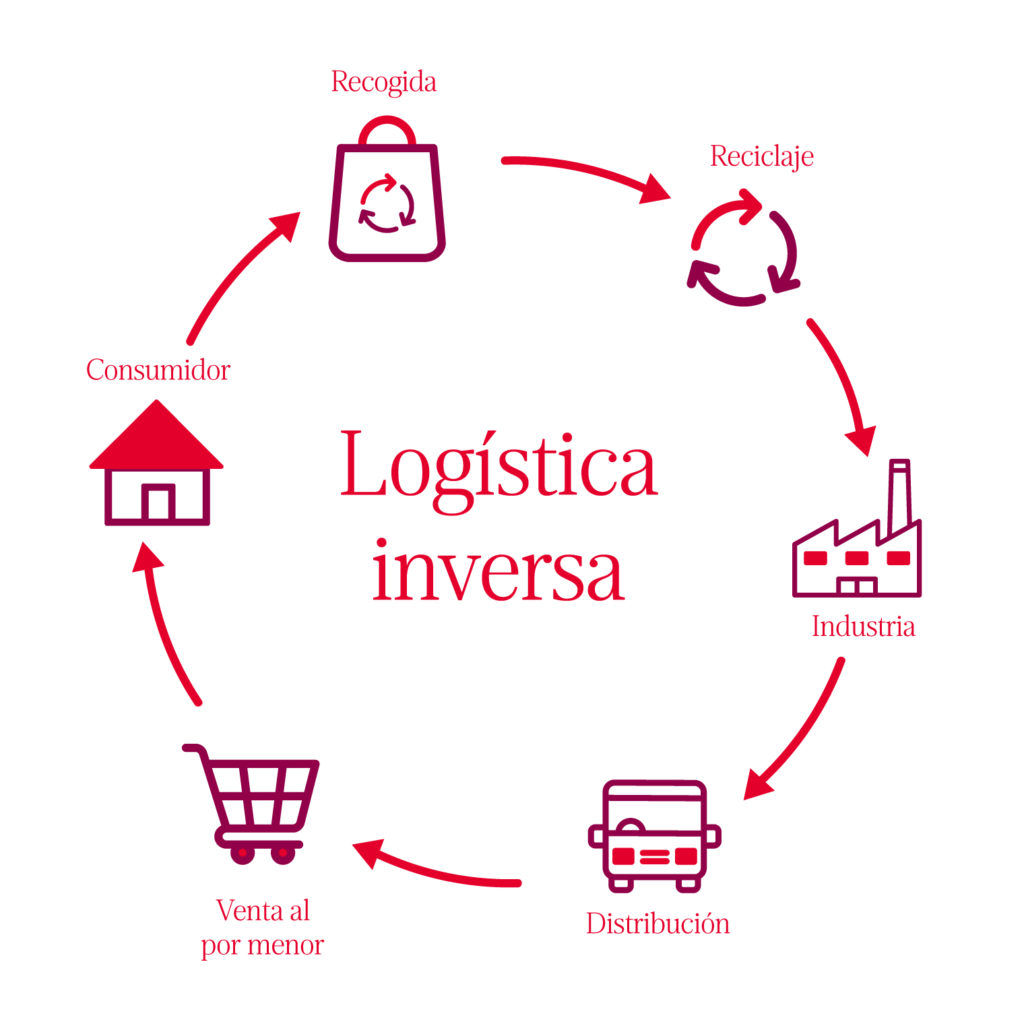
- The processes necessary for the supply chain to be completed.
- It is the consumer 's obligation to return the product once its useful life has ended.
- The originating company or supplier: the company becomes responsible for the product once it receives it. Its obligation is to dispose of it properly and in an environmentally responsible manner.
- Recycling and disposal of parts: the company's proper handling of these issues is vital. On the one hand, it must treat waste harmful to the environment with the utmost care and recycle it correctly. At the same time, to optimize efficiency, usable parts must be salvaged. These can then be used in other manufacturing processes.
- New production cycle : previously recycled parts are used to create new products.
Why implement reverse logistics?
- Better resource management
- Strengthening the company's image and reputation
- Cost reduction
- Cooperate in the care and protection of the environment
Now that you know what reverse logistics is, would you implement it in your company? Take the plunge and be part of the change!


