
Over the past few months, the transition to a resilient, low-carbon economy, which also promotes an inclusive recovery and social well-being, has risen in the agendas of investors and issuers. This is one of our main objectives, in addition to helping people become homeowners under environmentally friendly criteria and having launched a securitization fund to finance energy-efficient residential buildings and renewable energy projects in Portugal and Spain.
A large proportion of residential buildings on the Iberian Peninsula were built over 50 years ago, when the concept of energy efficiency in housing was still relatively unknown. However, today, the demand for homes that meet, or can potentially meet, certain environmental criteria for their energy use is constantly growing. To help meet this demand and bridge the gap between old and new, we launched our first green securitization backed by residential mortgages (RMBS), Green Belém No. 1 (Green Belém).
The €385 million bond issue, secured by owner-occupied residential properties in Portugal, is one of the latest mechanisms through which we incorporate environmental, social and governance (ESG) concerns into our core business.
The financial institution contributes to the rehabilitation and renovation of properties under sustainable, energy-efficient and environmentally friendly criteria, while providing risk advice to home buyers and expanding access to home ownership.
Integration of ESG into mortgage loans
Specifically, we are developing mortgage products that encourage the purchase of energy-efficient homes and loans that enable the purchase and renovation of homes to improve their energy efficiency. We also integrate ESG risk concerns into our origination policies, including the risks of the low-carbon transition, and translate these into financial risks. For example, the less carbon-neutral a building is, the less favorable the mortgage terms.
Philippe Laporte, deputy managing director of UCI, believes this integration allows the company to adopt a long-term approach with the client, advising them not only on the risks of buying a home and taking out a mortgage, but also on the financial benefits of owning an energy-efficient property. “Recognizing that many homes were built long ago without any thought to improving them or saving the planet, we can provide borrowers with cash or equity to improve the energy efficiency of their home,” he says.
At UCI, we are also partnering with other stakeholders in the mortgage industry to promote our goals as a sustainable and responsible provider. “As a responsible lender, we adhere to transparent criteria when communicating with our customers, using an innovative approach to co-creating products,” says Laporte.
"That means that, with three-quarters of our mortgage origination and distribution going through intermediaries or real estate agents, we align ourselves with them on the type of housing they want to sell and the types of mortgages we are willing to grant based on the clients, the homes and the neighborhoods they are in."
Aligning financing with the Sustainable Development Goals
To better define its sustainability ambitions, at UCI we looked to debt capital markets and developed a green bond framework that supports the mobilization of debt capital for sustainable and environmentally beneficial purposes.
This framework establishes a program for the issuance of green financial instruments , including green bonds (such as Green Belem), green private placements, and green loans. By using the proceeds to finance or refinance, in whole or in part, the acquisition, development, and renovation of energy-efficient residential buildings in the Spanish and Portuguese real estate sectors, UCI aims to meet the specific objective related to sustainable products.
Within this framework, the company plans to allocate €47.5 million to its range of eco-friendly products, of which 93.7% will be in Spain and the remainder in Portugal by 2020. Between 2020 and 2025, the financial institution aims to increase by 73.3% the amount of revenue allocated to its range of eco-friendly products, or green investments. A total of €325 million is projected, focusing on the acquisition and green renovation of homes, which represents 76.9% of the committed funds. Over the five-year period, 94.3% of the revenue will be allocated to projects located in Spain and 5.7% in Portugal.
Second-party opinion provider Sustainalytics considered that the framework's environmental credentials align with the four components of the International Capital Market Association's 2018 Green Bond Principles (which covers the use of proceeds for sustainable activities aimed at carbon reduction4): Use of proceeds, Assessment and selection process, Revenue Management, Reporting and External.
The investments of the income are also aligned with the European Mortgage Federation 's (EMF) Energy Efficient Mortgage Initiatives (EEMI) 5 (see Figure 1) a market-led initiative signed by more than 67 lenders, 6 which designs a framework to channel private finance towards investments in energy-efficient buildings and energy-saving renovations to commit to a sustainable, low-carbon society.
Incentive for borrowers
Under the initiative, borrowers are encouraged to improve the energy efficiency of their properties or purchase highly energy-efficient properties through favorable mortgage-linked financing terms. These initiatives will also help ensure a green recovery from the Covid-19 pandemic and contribute to the Next Generation EU vision.
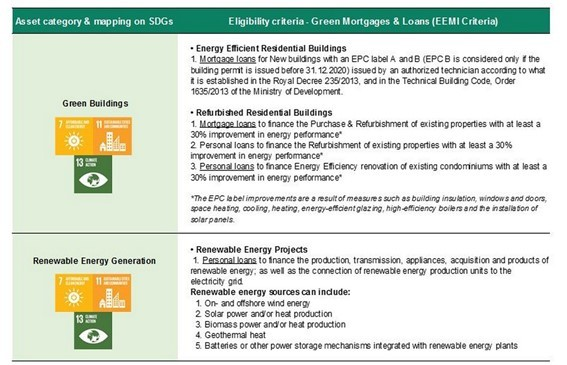
Image 1: Buildings considered eligible for green mortgages and loans
Source: UCI's Green Bond Framework
As one of the EEMI-EMF lenders, we incentivize borrowers to make purchases that meet these conditions for loans that are considered green (no origination fees and a reduction in the spread/interest rate) and a reduced deposit (less than 5% of the property value) for new buildings.
For these mortgage loans, at UCI we have developed a dashboard to monitor the volume of green projects assigned, energy consumption savings (kW/hr); the average price of operations, their profitability and portfolio performance (loss in case of default; probability of default; default exposure).
On the one hand, we will report on the allocation of net proceeds from issued green financial instruments to investors, including the total outstanding volume (in EUR) of green financial instruments issued under the Framework (see Figure 2), the allocation of net proceeds from issued green financial instruments to a portfolio of Eligible Assets (or expenditures), including a breakdown of the allocation to specific Use of Proceeds on an aggregate basis and the value of unallocated proceeds (if applicable).
On the other hand, we will also discuss relevant impact metrics, such as the composition of the portfolio's EPC label, estimated energy savings in kWh, and examples or case studies of eligible assets.
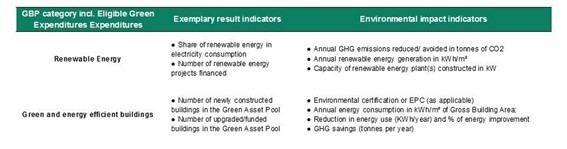 Image 2: Report on the impact of green bond revenues
Source: UCI Green Bond Framework
Securitization as a vehicle for sustainability
With the designation of the green bond issuance revenue framework for the development of mortgage products, Laporte describes the RMBS Green Belém No. 1 fund as the "perfect project" to align financing with mortgages that meet its responsible and sustainable lending criteria.
“To achieve this alignment, it was not only a matter of using the proceeds from securitization to provide mortgages that met the energy efficiency criteria for renovation and construction (green mortgages), but the issuance also had to qualify as safe, transparent and simple (STS) according to the EU Securitization Regulation,” Laporte says.
Issued in April 2020, Green Belém was therefore the first RMBS to qualify as an STS and was issued by TAGUS, a special purpose vehicle owned by Deutsche Bank. The proceeds are being used to provide mortgage loans (“green receivables”) that incentivize borrowers to make energy-efficient purchases or renovations in Spain and Portugal. Commenting on the instrument’s novelty to the market, Laporte explained that “when we started building our approach to funding sources that used different instruments like RMBS, it had to be based on STS.”
This allowed us to diversify its funding sources outside the Spanish market, where it is a frequent debt issuer (having issued its first green mortgage in 2018), and to target a broader group of investors by diversifying its revenue streams into energy. To this end, we channeled the proceeds into products that will finance a wide range of homes, including those with EPC9 Energy Performance Certificates.
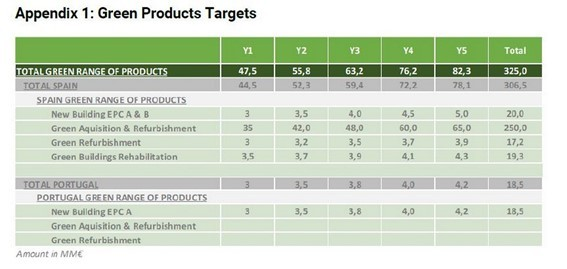 Image 3: Allocation of green bond proceeds to housing projects in Spain and Portugal
Source: UCI Green Bond Framework
Transaction structure
In accordance with the green bond framework, we are using the proceeds from the RMBS issuance, comprising €331.3 million of maturing Class A notes, €25.5 million of Class B notes, and €35.2 million of Class C notes (all maturing in March 2063 if the five-year call option is not exercised), to originate green receivables or mortgage loans for residential properties that meet the Climate Bond Initiative's sector-specific criteria for low-carbon buildings within five years of the issuance date. At UCI, we will offer four different product lines: green personal loans for condominium renovations; green personal loans for single-family home renovations; green mortgage loans for new-build properties (Energy Class A or B); and green mortgage loans for existing properties (purchase and renovation).
To support capital market inflows into these products, we have partnered with the European Investment Bank (EIB), through which the supranational lender is investing up to €100 million in the senior tranche of the RMBS11. UCI’s alliance with the EIB to finance green investments in the Iberian Peninsula, specifically to renovate real estate buildings and promote the construction of nearly zero-energy buildings12, originated in 2019 when UCI launched its green mortgage lending branch. “Our collaboration with the EIB under the EEMI-EMF project will allow us to further promote energy efficiency and more sustainable housing in both Spain and Portugal,” says Laporte. “With the EIB’s participation, the green bond provides us with the ‘perfect vehicle’ through which we can reinvest the proceeds from the issuance in green housing.”
Against all odds
But this participation didn't guarantee smooth navigation. Being the first securitization to be labelled as STS under the Securitization Regulation required skill and coordination on multiple fronts to present the draft prospectus to regulators (the Portuguese Securities Market Commission, CMVM, in January 2020 and the Bank of Portugal/European Central Bank in March 2020). “We had to ensure that the regulator, the rating agencies (Fitch and DBRS), the arranger, and all the stakeholders in this deal – Deutsche Bank and its issuer, Tagus – were aligned with our project and the STS framework by the planned start date of the end of March 2020.”
And that was the easy part. Green Belém hit the market at the start of the Covid-19 pandemic in April 2020, just two weeks behind its initial timeline, as states of emergency were being declared around the world. “When Green Belém was first envisioned in 2019, we knew nothing about Covid-19, nor that the market would be locked down,” Laporte recalls.
The pandemic forced us to delay the deal by a month, until April. “ We needed to be sure that everyone involved in this deal was safe at home and could give the green light for it to go ahead,” Laporte continued. “ That’s why the placement of this deal had a tremendously positive outcome despite the strong headwinds.”
Investor engagement
Faced with these challenges, at UCI we looked for new ways to engage investors, given that mid-March 2020 was not a good time to go to the markets, as they were all locked down. “All the investors had gone home, and when we called, there was no answer,” says Laporte. “Therefore, we agreed with the deal arrangers and the EIB that, instead of postponing it until after the summer, since we didn't know if things would improve or not, we would do it as a private placement with a couple of investors. They knew the portfolio very well and agreed on the price and the stake they would take.”
In addition, the Fitch rating agency noted improved creditworthiness, positive portfolio selection, fully sequential amortization of the notes, and the low interest rate environment as mitigating factors in its report on the transaction.13
Boosting energy efficiency
Despite the odds, Laporte says Green Belém benefited from the alignment of the green bond framework with the EEMI-EMF, the lender portfolio, and its ESG objectives. “Through this combination of elements, we pioneered the initiative and are proud that companies are using it,” Laporte explains. “It shows what can be achieved in the industry with coordination and collaboration, despite the challenges related to Covid and the fact that it required political buy-in and alignment with various stakeholders.”
With this combination, RMBS Green Belém 1 was awarded the Sustainable Finance Award by the Portuguese stock exchange Euronext Lisbon14. Laporte reflects that winning this award gave the lender visibility as a pioneer of an original transaction completed in a challenging global environment. “Although we are well known in the RMBS market in Spain with our RMBS Prado15 Program, Green Belém gave UCI the opportunity to demonstrate our commitment to green assets,” he notes.
Laporte concludes that Deutsche Bank's platform for issuer services also helped the issuer provide the necessary transparency and information to investors. This enabled UCI to integrate ESG into its core activities. “When you make a deal, you implement it and report on it. You have to establish cash flows and prepare reports so that the speed and quality of reporting to investors is essential,” he adds. “In this respect, we are very pleased with the work Deutsche Bank has done behind the scenes and the collaboration we have with the bank through the Tagus special purpose vehicle.”


