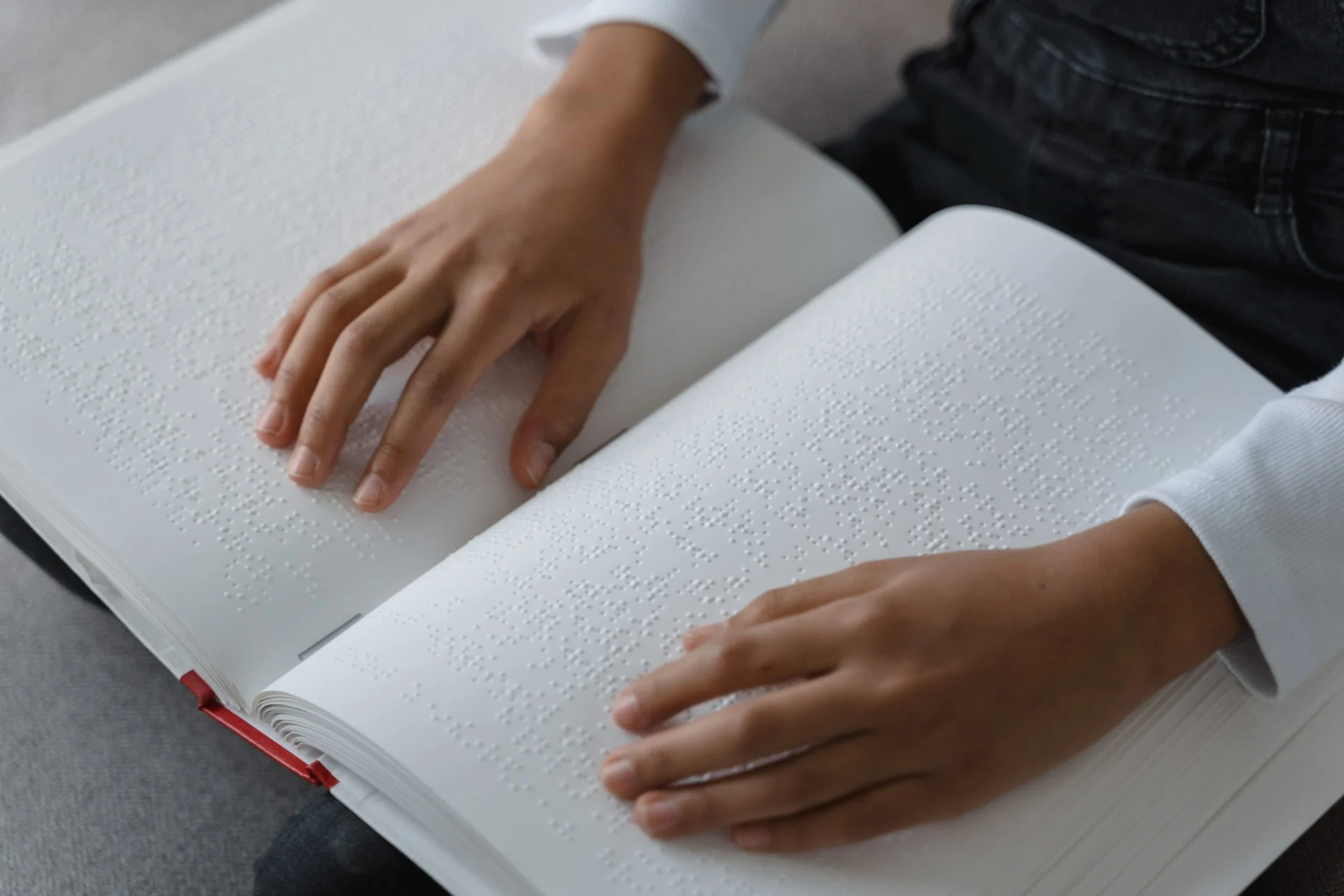
Today is World Braille Day. The UN has recognized this day since December 28, 2018. Multilingualism is one of the core values of this institution. We should all be able to communicate with each other and easily understand our surroundings.
According to the World Health Organization, there are approximately 36 million blind people worldwide, and 216 million suffer from moderate or severe visual impairment. Consequently, these individuals are more likely to live in poverty, experience poorer health, and face greater difficulties accessing quality education and employment.
What is the Braille system?
Braille is the language used by people with visual impairments or blindness to write and read texts, books, or documents. The Royal Spanish Academy (RAE) defines it as "the writing system for the blind that consists of raised symbols that can be read with the fingers."
This system was invented in the mid-19th century by the Frenchman Louis Braille, who lost his sight at the age of three due to an accident in his father's workshop. At 15, he became a teacher at the School for the Blind and Deaf in Paris. There, in order to have an effective teaching method, he based his work on the system invented by the military officer Charles Barbier de la Serre and refined it. The first version of Braille was published in 1829.
The Braille alphabet consists of cells of six raised dots, arranged in a matrix of three rows by two columns, conventionally numbered from top to bottom and left to right. The presence or absence of dots allows for the encoding of symbols. These six dots produce 64 different combinations. There are also special distinguishing marks to represent a letter as uppercase, italic, a number, or a musical note.
Commit to inclusion
In recent years, there has been a growing commitment to integrating blind children into schools. Currently, there are 4,172 children between the ages of 0 and 18 affiliated with ONCE (the Spanish National Organization of the Blind) in Spain. The aim is to prevent the exclusion that schools for the blind or visually impaired can create.
All students have the same right as any other student to receive equitable and quality education, respecting their specific needs to enable their full educational and social inclusion. To achieve this, a strong commitment is necessary. Depending on the specific needs related to visual impairment, specialized professionals must be available for teaching.
And what about vision loss in adulthood?
Losing your sight in adulthood means relearning to read and write. For this reason, the ONCE Foundation has intensified its Braille instruction program for people who lose their sight in adulthood.
According to Ana Isabel Ruiz, Director of Education, Employment and Braille at ONCE, “ the objective of this new service from the Braille promoter is to intensify teaching for people who lose their sight in adulthood, a task that in recent years has been carried out through instructors of assistive technology for the blind, but which we understand needs updating .”


