The ITE, or Building Technical Inspection, in Spain has become a cornerstone of residential safety. Just as vehicles must undergo a technical inspection (ITV), buildings must have a periodic inspection to guarantee their stability and habitability over time.
The ITE (Technical Building Inspection) is not only a legal requirement in Spain, but also a key tool for addressing the aging of the building stock. This article tells you everything you should know about it.
What is ITE?
The ITE is a technical, regulated and mandatory control that buildings and homes must undergo, which aims to evaluate the state of conservation, safety and health of the buildings.
It mainly applies to buildings over 50 years old, although some autonomous communities, such as Madrid, establish shorter periods .
Differences between ITE and IEE
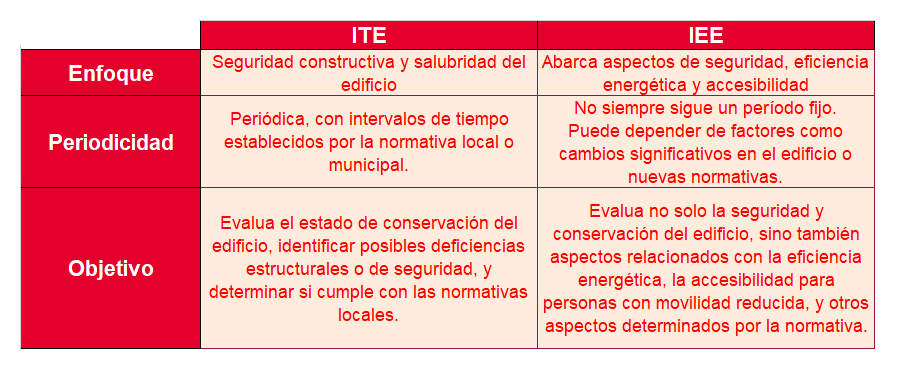
The Technical Building Inspection (ITE) and the Building Assessment Report (IEE) are technical procedures used to assess the condition of buildings, although they differ in their approaches and scopes.
Although both procedures aim to ensure the proper maintenance and functioning of buildings, the ITE focuses primarily on structural safety and health, with a more regular approach. The IEE, on the other hand, goes further by considering additional aspects such as energy efficiency and accessibility, and its frequency can vary depending on the specific circumstances of the building.
What does an ITE involve?
The ITE involves a thorough review of the structure, facade, installations and common elements of the building.
The ITE (Technical Building Inspection) is not only a legal requirement, but also a guarantee of safety for residents. Identifying and addressing structural problems in a timely manner prevents accidents and maintains the building's integrity, ensuring a habitable environment in the long term.
Who can carry out a ITE in Spain?
This inspection must be carried out by specialized technicians such as architects, technical architects, building engineers or construction engineers, who visually review the elements of the building, identify possible deficiencies that could lead to risk situations and establish corrective measures.
These professionals issue a detailed report, indicating the state of conservation and the possible interventions needed, which the owners must comply with to guarantee safety and avoid penalties.
When is it mandatory to undergo a ITE (Technical Building Inspection)?
The ITE is regulated by Royal Decree Law 8/2011 of July 1 , which establishes the obligation to pass the Technical Inspection of Buildings in those buildings that are over 50 years old unless, as we said at the beginning, the Autonomous Communities set another form, deadline or conditions in which this examination must be fulfilled.
Passing the ITE (Technical Building Inspection) is mandatory for all owners in a community, so if one of the neighbors refuses, the rest could take legal action against him.
How can I find out if my building needs to undergo the ITE (Technical Building Inspection)?
Each town hall's urban planning department maintains a list of buildings and single-family homes that must undergo the ITE (Technical Building Inspection) each year, which you can find on the town hall's website. The town hall can also notify the owners.
In addition, many cities have public records of buildings that have passed this test.
Is it mandatory to pass the ITE (Technical Building Inspection) to sell or rent a home?
Yes, as a general rule, the law requires sellers to give buyers the certificate of suitability for those homes that have had to undergo the ITE (Technical Building Inspection) due to their age.
The inspections carried out on the entire building extend to the homes and premises that exist within it.
How much does a building inspection (ITE) cost and who pays for it?
The cost of an ITE (Technical Building Inspection) depends on the technician's fees, the size of the building and its condition, and can range from €300 for single-family homes and €500 for multi-family homes to €4,000 for the largest buildings.
In any case, the cost of the ITE is borne by the entire community of owners.
Are there any grants or subsidies to help pay for it?
Although there are no subsidies for the cost of the Technical Building Inspection, you could benefit from aid from the Next Generation EU Funds for actions related to energy rehabilitation (facades or roofs) and other accessibility works.
Furthermore, you could benefit from income tax deductions for energy-efficient renovations.
How do I carry out the ITE (Technical Building Inspection) of my building?
To carry out a building inspection (ITE), a qualified technician is required to assess the building's condition and prepare the corresponding report. This report must be endorsed by the Urban Planning Department of the municipality where the property is located.
How many years does the ITE last?
After passing the first ITE (Technical Inspection), it is mandatory to carry out a renewal every 10 years.
When is an ITE considered favorable?
After an evaluation by a specialized technician, the condition of a building can be classified into four categories: no deficiencies, minor deficiencies, serious deficiencies, or very serious deficiencies.
The ITE will be considered favorable when the building meets the requirements of habitability, functionality and stability.
What happens if an ITE is suspended?
If the result of the ITE is unfavorable or negative, it means that the property has serious deficiencies or that endanger the safety of its inhabitants or passersby.
In all cases, it will be essential to act quickly to correct any deficiencies found and submit a certificate of suitability issued by a qualified professional. Furthermore, for major projects, such as facade repairs requiring a project plan, a certificate of completion endorsed by a professional association will be necessary.
If the recommendations or deadlines set are not met, the authorities could impose financial penalties, order the eviction of the property and even request its demolition.
The MOT of the buildings
Just as vehicles must pass the MOT test to be driven on public roads, buildings must undergo the ITE (Technical Building Inspection). Both inspections aim to ensure that structural elements are in optimal condition. The ITE is similar to the MOT test in that it is a periodic process designed to prevent potential problems before they become safety risks.
The vehicle inspection (ITV) shares the fundamental objective of the building inspection (ITE): to ensure that the means of transport, whether a building or a car, meets safety standards. Both inspections require the owner's commitment to making the necessary corrections and obtaining the corresponding approval.
The challenges of the Spanish building stock
Energy Rehabilitation to promote the sustainability of the building stock
With an aging building stock, the ITE (Technical Building Inspection) becomes a crucial ally. The age of buildings presents specific challenges, from obsolete systems to a lack of insulation, as four out of five buildings are considered inefficient or were built before the first energy efficiency regulations. By detecting these problems, the ITE acts as a starting point for renovation, ensuring that older buildings are adapted to modern sustainability standards.
The ITE (Technical Building Inspection) goes beyond assessing safety; it can also raise awareness about energy efficiency. By identifying structural deficiencies, it creates an opportunity to integrate improvements that not only strengthen safety but also promote sustainability, thus contributing to energy-efficient renovations, reducing CO2 emissions from buildings, and saving homeowners money.
The Technical Building Inspection (ITE) and energy-efficient renovations share a common goal: to improve quality of life and reduce environmental impact. Integrating efficient measures, such as the renovation of installations and the implementation of more sustainable materials, becomes a priority during the renovation process that begins with the ITE.
In line with the ITE (Technical Building Inspection), the authorities are promoting incentives such as Next Generation EU funds and income tax deductions for home renovations to encourage energy-efficient retrofitting. These incentives aim not only to comply with environmental regulations but also to modernize Spain's housing stock, creating more efficient and resilient homes.


