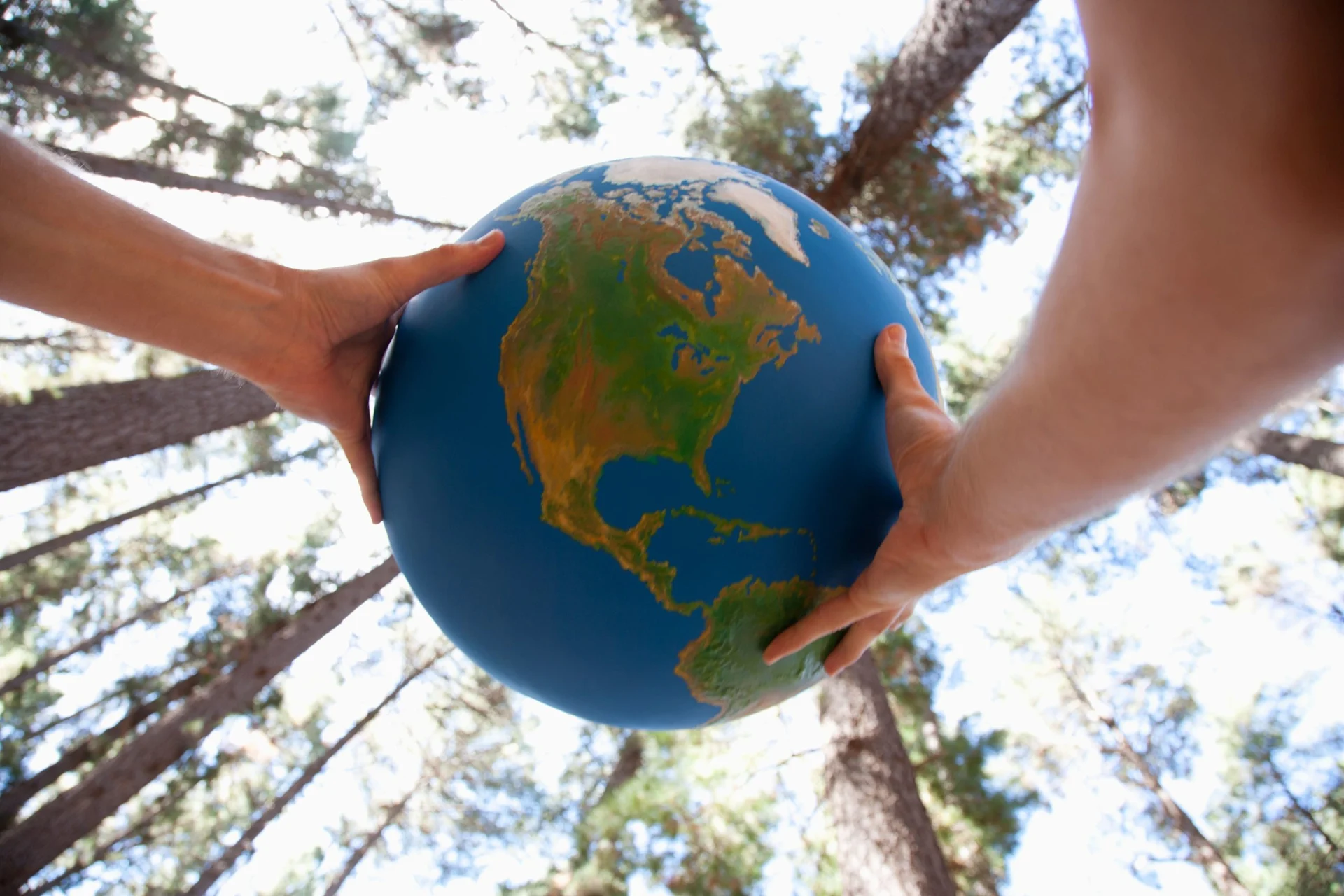
Today, April 22nd, is Earth Day. This date was established to raise awareness about the need to protect the environment and conserve biodiversity, curbing pollution and encouraging the responsible use of natural resources.
To support this day, we've created the guide 'How to Care for the Earth from Home' with guidelines for creating energy-efficient homes. Its goal? To raise awareness among Spanish homeowners about the importance of living in healthy homes.
According to the WHO, a healthy home is defined as “a residential space that promotes the health of its occupants, a refuge that supports a state of physical, mental, and social well-being.” Therefore, it consists of homes with:
- Good construction and materials
- With elements that have a positive impact on health
Examples of this include good lighting conditions, outdoor spaces, and proximity to green areas.
Our Earth Day survey
Efficiency criteria also influence how healthy a home is, and in our country, only 5% of properties are energy efficient . This means they consume only the energy they actually need, without waste due to poor insulation or bad practices, and using clean, non-polluting energy sources.
This type of housing is increasingly in demand among Spanish homeowners, as our survey shows a growing interest in healthier and more efficient homes in Spain.
In fact, almost half of homeowners in Spain would invest in their home with this objective: 23% between 5,000-10,000 euros and 24% would be willing to spend between 10,000-50,000 euros; while 21% would move to another home in search of these characteristics.
These investments would be primarily allocated to renovation work for the insulation of floors, walls, ceilings and windows; the replacement of traditional heating systems with cleaner and more efficient ones - such as aerothermal or geothermal energy -; as well as the installation of solar panels for energy self-consumption and home automation systems.
Among the aspects of housing that homeowners most frequently mention as detrimental to their health are, in this order:
- Presence of dampness
- Lack of natural light
- Poor thermal conditioning
- Cleaning of the property
- Inefficient sound insulation
- Poor safety of the environment
- Poor indoor and outdoor air quality
- Building accessibility
Taking care of the Earth from home with small gestures
In keeping with our commitment to health and efficiency at home, UCI offers some tips for taking care of the planet from home with small daily actions.
- Lighting: make the most of natural daylight hours, use LED bulbs and avoid having several light sources in the same room if they are not strictly necessary.
- Electronic devices: When charging batteries, use airplane mode and don't unplug until fully charged, and avoid leaving devices in standby mode. These two simple actions help reduce energy consumption and save up to 10% on your bill.
- Appliances: In the kitchen, avoid opening the oven while it's on, as it loses about 20 degrees of temperature and uses more energy to reheat. Also, take advantage of the residual heat from the hob by turning it off a few minutes before the food is ready. As for the washing machine, opt for short wash cycles with cold or warm water for full loads, and then, to reduce energy consumption, dry the clothes outdoors.
- Water: use efficient taps with flow restrictors and single-lever mixers and opt for the dishwasher instead of washing by hand because continuous tap use generates 40% more water consumption.
Message from Cátia Alves, our Sustainability Director
Our Sustainability Department has a very clear understanding of what World Earth Day means.
Cátia Alves, Director of CSR and Sustainability at UCI , reminds us that “ caring for the Earth must be everyone’s commitment, and it doesn’t require grand, one-off gestures; these small, good daily practices that we can do without leaving home are far more valuable .” Along these lines, Alves continues , “We are increasingly aware of our responsibility to protect the planet and are trying to implement measures in this regard. A good example is the growing interest in living in energy-efficient homes, which help both ourselves and our environment.”


