
The widespread uncertainty following the outbreak of the conflict in Ukraine has reached the Spanish real estate market. The Bank of Spain recently warned that interest rates will continue to rise until inflation falls to 2%, while the latest figures for this indicator reached 7.3% in October 2022, according to the National Statistics Institute (INE). This situation is widening the gap between housing supply and demand. This is the main conclusion of the 13th Real Estate Barometer – 'Market Sentiment of Real Estate Professionals', a study conducted by UCI in collaboration with our professional development division, SIRA .
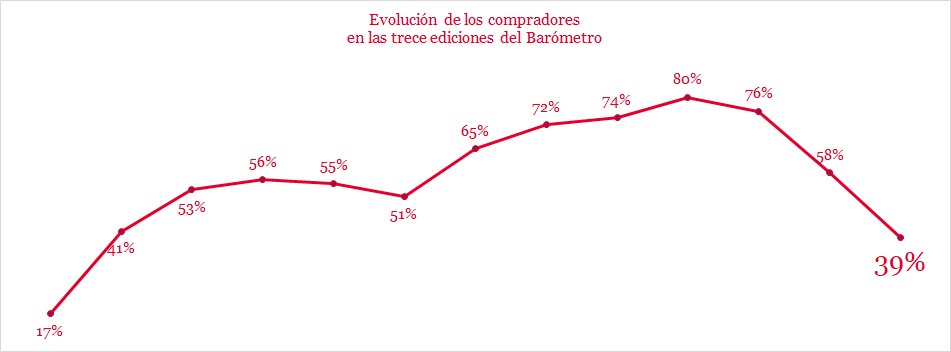
This edition highlights that only 39% of the agents surveyed claim to have maintained or increased their portfolio of buyer clients during the third quarter, while the remaining 61% are already observing a progressive reduction in those seeking housing.
Professionals' perception of the stability or increase in the volume of buyers has fallen 19 points , to 39%, coinciding with rising interest rates and record highs in the Euribor.
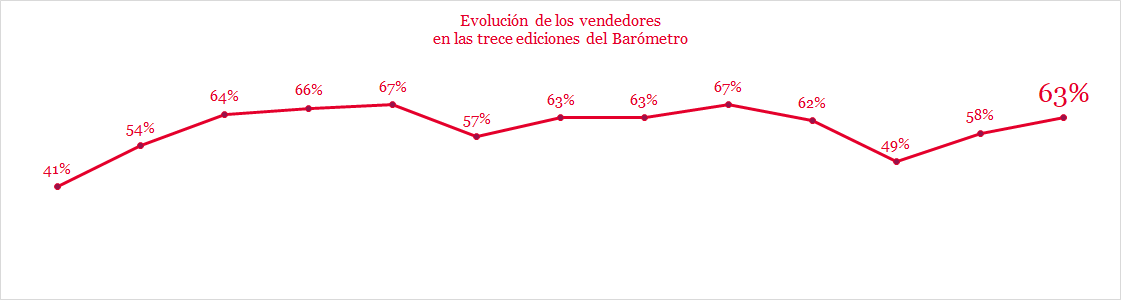
The decline in demand is accompanied by an increase in supply, as six out of ten real estate agents (63%) say that the number of seller clients has increased or stabilized during the third quarter of 2022, 5 points higher than in the previous edition of the Barometer.
The gap between supply and demand for privately owned housing will continue to widen, at least until the end of the year, according to forecasts from real estate agents surveyed by UCI and SIRA. In fact, almost seven out of ten professionals (68%) believe that the number of sellers will increase or remain stable by year's end , while 73% of professionals believe that the number of buyers will decrease in the coming months.
This situation will also affect the closing of deals during the last months of the year, as less than half of the professionals (42%) believe they will remain the same or increase. At the opposite end of the spectrum , 57% of agents predict a moderate decrease in the number of transactions.
The imbalance between supply and demand in the real estate market could lead to a general drop in prices. However, this edition of the Barometer reveals a resistance to price declines during the third quarter, as 74% of professionals still maintain that prices have remained stable or increased during this period.
However, when asked about their expectations for the fourth quarter, six out of ten professionals (62%) already point to declines in housing prices.
But optimism remains high.
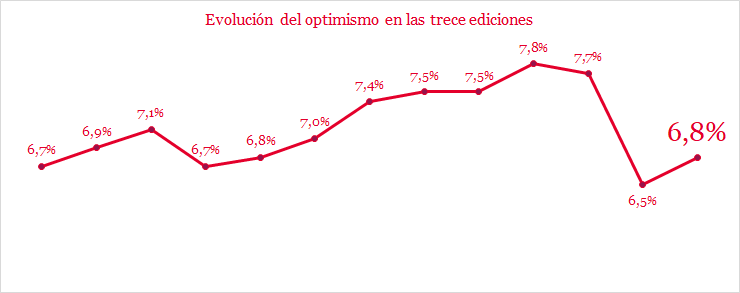
Despite a less than optimistic outlook until the end of the year, this report highlights that the level of optimism among professionals is 6.8/10, which represents a slight increase compared to the data from the previous edition.
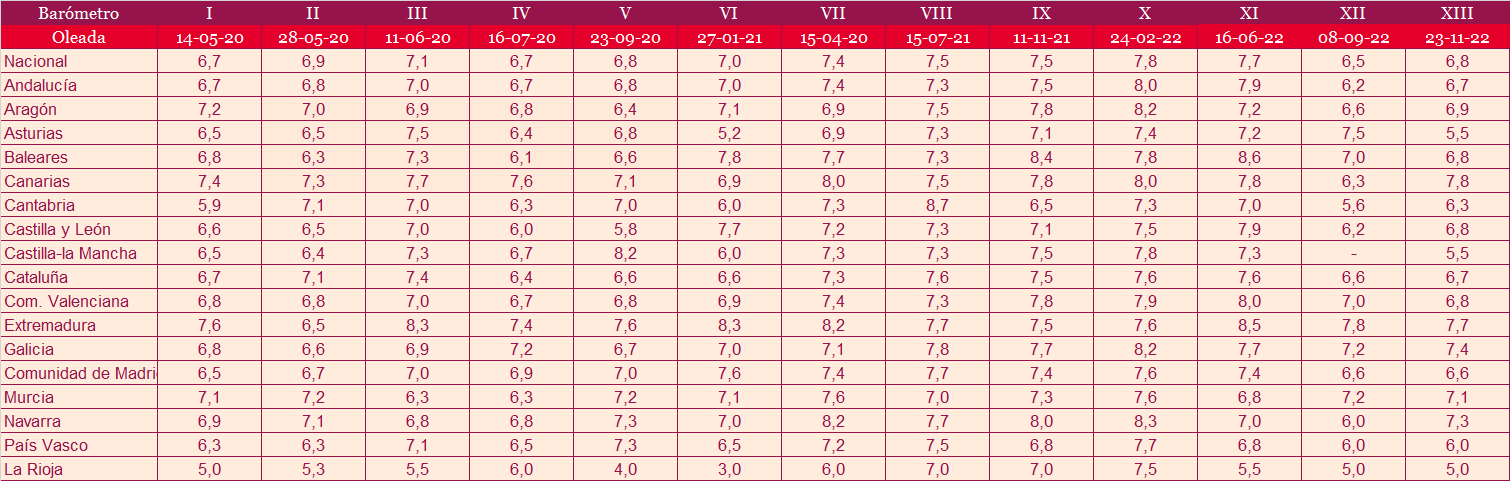
The perception of real estate agents varies greatly at the regional level: the Canary Islands (7.8/10), Extremadura (7.7/10) and Galicia (7.4/10) are the autonomous communities with the greatest optimism in the sector, while on the opposite side are: La Rioja (5/10), Asturias and Castilla – La Mancha (both with 5.5/10) and the Basque Country (6/10).
Growth opportunities in the current environment
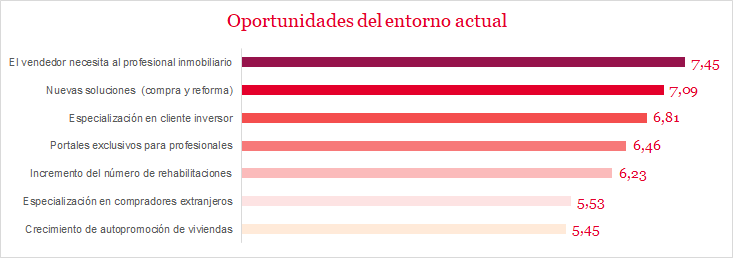
With the aim of delving deeper into the reasons for this slight but growing optimism in the face of the sector's uncertainty, the 13th Real Estate Barometer has investigated the growth opportunities that real estate professionals see in the current environment .
Thus, 7 out of 10 agents believe that home sellers need real estate professionals more than ever to help them sell their property in the face of market instability, and they expect their businesses to grow in the short term.
Furthermore, the majority of real estate professionals in Spain also see good market opportunities in the arrival of the EU's Next Generation funds for home renovations – 7 out of 10 see the new mortgage financing solutions for buying and renovating homes as an opportunity to generate business in the current uncertain environment – and 6 out of 10 professionals positively value the increase in the number of renovations and refurbishments. Indeed, the previous edition of the Barometer revealed that half (51.2%) of agents in Spain stated that their clients would carry out renovations after purchasing their home, and more than half of buyers (54.2%) would be willing to invest 20% of the value of their newly acquired home in renovations.
On the other hand, almost 7 out of 10 professionals see the current environment as a good time to specialize in investor clients, due to housing's status as a safe haven in times of uncertainty.
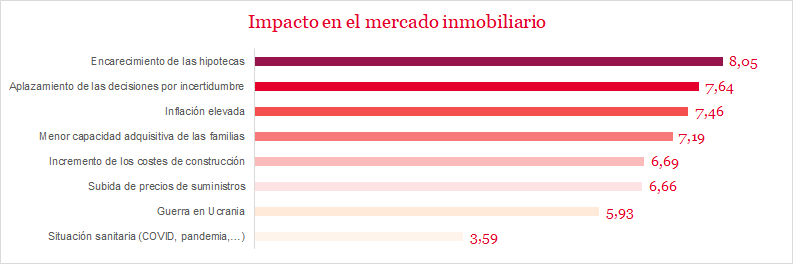
Given the current market uncertainty, the 13th wave of the Real Estate Barometer also aimed to highlight the reasons and factors that have most affected the real estate market over the past year. In this regard , most professionals attribute the sector's current situation to the rising cost of mortgages. This is followed by the postponement of purchase decisions due to economic uncertainty, high inflation, and reduced household purchasing power.
Employment in the real estate sector stabilizes in the 13th Real Estate Barometer
Economic uncertainty is affecting employment levels in most professional sectors. This is not the case in the real estate market, which appears to be gradually recovering, with approximately 165,000 people working in this sector in the third quarter of 2022, according to the latest Labor Force Survey (EPA) from the Spanish National Statistics Institute (INE), compared to 163,000 in the second quarter.
The professionals themselves confirm this stability in the XIII Real Estate Sector Barometer , as 86% say that the number of employees in their agency has remained stable or has grown , compared to 85% who highlighted this same situation in the previous edition.
According to our deputy general manager, José Manuel Fernández: “2022 has been a year of contrasts, with record-breaking figures in the first half of the year, but also with significant uncertainties caused by high inflation and a drop in the number of buyers. It is difficult to predict whether this situation will continue in 2023, so the best thing we can do in the sector in such an uncertain environment is to foster adaptation to change, improve team training, advance the digitalization of processes, and adapt to customer needs.”


