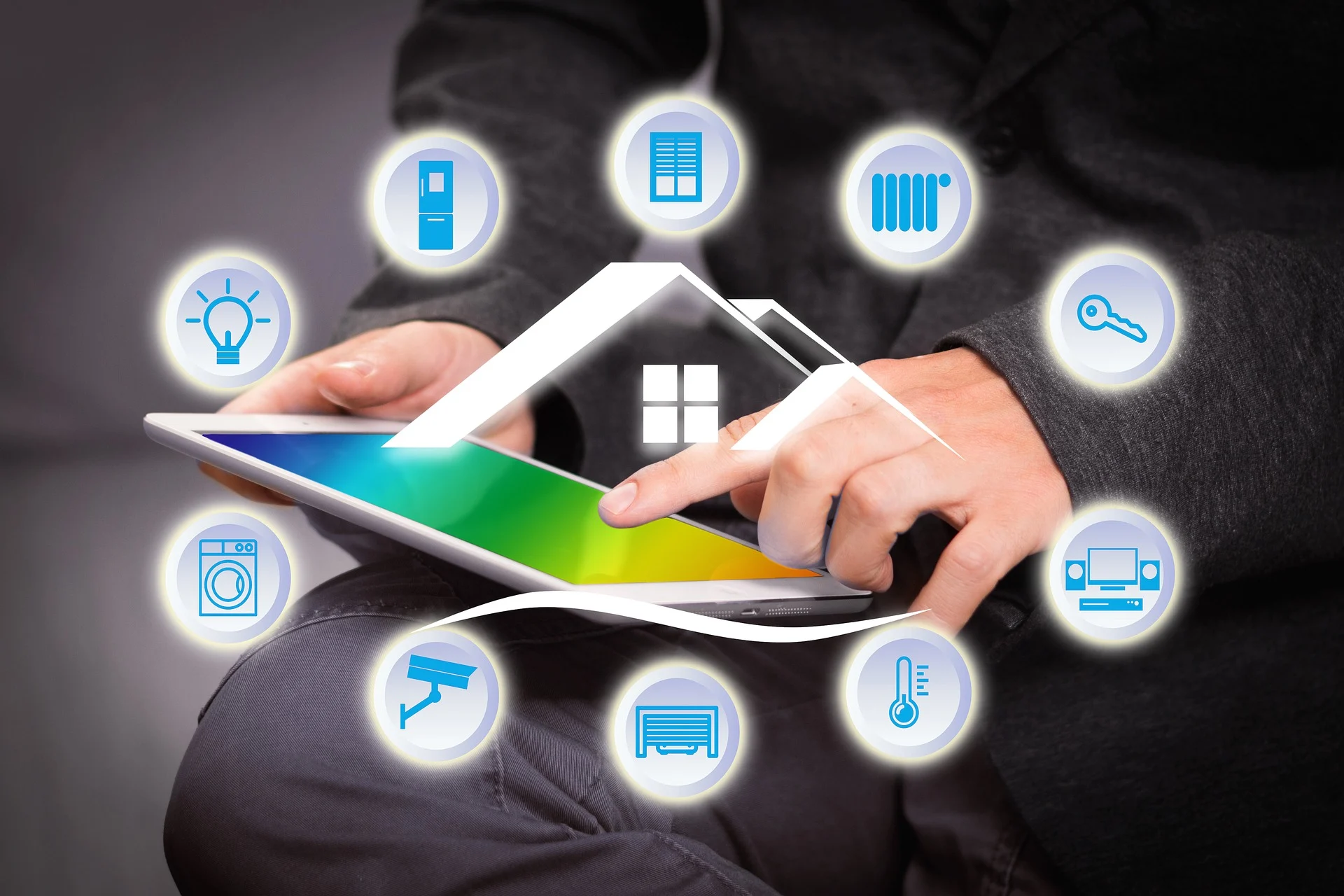
Technology is increasingly taking up more space in our lives, and of course, in our homes. Smart homes, or automated homes, are defined as those that are energy efficient, fully accessible, and offer complete security to their occupants.
Home automation in Spain
In Spain, interest in home automation is growing, although it is still in its early stages. In fact, according to the home automation sector in our country, it is estimated that by 2024, 20% of homes (both new and existing) will have some type of connected device, representing a 300% increase compared to 2020.
The cost of a home automation system in a house in Spain varies depending on the square footage or the quality of the equipment and, on average, usually ranges between 900 and 2,500 euros, a lower amount if it is a small apartment.
Our study
At UCI, we conducted a survey to analyze homeowners' interest in having smart features in their homes. Among those surveyed, only 11% say they currently live in a smart home. However, almost half (48%) already have smart home features in their homes, whether automated systems, smart devices, or IoT devices.
Furthermore, in the medium to long term, an overwhelming majority (93%) would be willing to install or expand home automation solutions in their homes, although 88% consider the installation of these systems to be expensive. Meanwhile, only 7% express no interest in having smart devices in their homes.
And what about the investment? Creating a smart home requires a significant outlay. 20% of those surveyed would spend between €500 and €1,000 on one of these devices, while 25% would invest more than €1,000. It's understandable that only 11% would be willing to dedicate between €5,000 and €10,000 to convert their house into a smart home.
Home automation in Spanish homes is "still in its early stages. But, without a doubt, comfort and efficiency at home are becoming increasingly important to us, and this is closely linked to home automation. We're not going to see 100% smart homes overnight, but we will see the gradual incorporation of these smart elements because, as has happened in other sectors, digitalization and technology will also make our lives at home easier," says Cátia Alves, our director of sustainability and CSR.
Which home automation elements are of most interest?
According to those surveyed, energy savings, security, and comfort are the main advantages of living in a smart home. It's no surprise, then, that starting with the digitization of some rooms or elements is the most common trend. Few, however, are committed to fully digitizing their homes.
In order of priority, the most important things are:
- Smart assistants and speakers.
- Smart bulbs
- Automatic temperature regulation
- Alarm systems with notification
Although to a lesser extent, Spaniards would also like to have smart appliances and blinds at home, automatic door opening and closing, or a robot vacuum cleaner that cleans by itself.


