Madrid, February 24, 2026 – Climate change is barely among the priorities of those looking for housing in Spain. Only 12.1% of potential buyers mention it as one of the factors that most concern them when choosing a home, according to the latest analysis by UCI, Unión de Créditos Inmobiliarios, a specialist in sustainable housing finance.
However, more than 2.7 million people live in areas at high risk of flooding, according to official mapping by the National Flood Zone Mapping System (SNCZI), which is part of the Ministry for Ecological Transition and the Demographic Challenge. Recent storms that have affected various regions of the country have once again highlighted the growing vulnerability of residential areas to extreme weather events, the frequency and intensity of which have been reported by the State Meteorological Agency.
Price is king
While 12% mention climate change, traditional factors continue to dominate the purchase decision: 72% cite price as their main concern, followed by suitable location (48.8%) and the ability to afford housing with their own salary (48.3%). 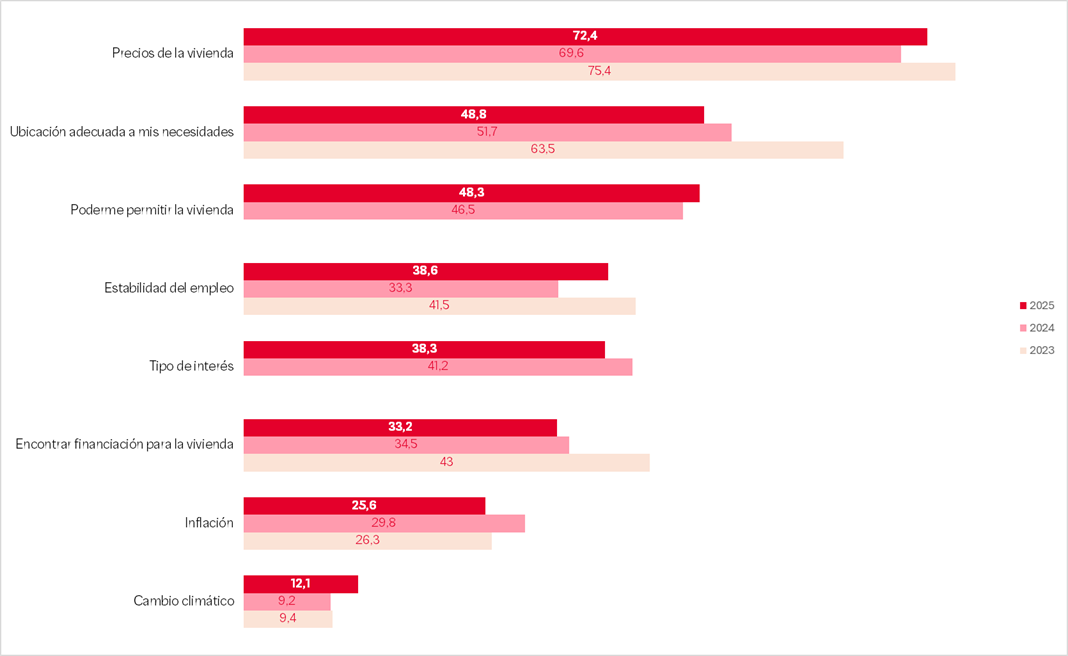
The buyer prioritizes the immediate. But exposure to climate risk is a variable that can influence the future value of the property, insurance conditions, or the need for adaptation measures.
Climate risk is now part of the European financial system. The European Banking Authority (EBA) requires institutions to incorporate climate and environmental risks into their management frameworks and prudential analysis. This means that exposure to certain physical risks—such as floods—is now part of the comprehensive financial risk assessment of institutions.
Therefore, integrating climate risk into the system seeks to strengthen the long-term sustainability and resilience of the built environment.
UCI emphasizes that integrating this perspective as buyers does not imply discarding locations, but rather expanding the available information before committing to a long-term investment.
“It’s understandable that buyers focus on price or interest rates. But climate risk is now a structural variable that should be considered before choosing a home. Anticipating this risk protects family assets and strengthens the sustainability of the property,” says Lorena Zenkñussen, Director of Mortgage Financing at UCI.
Informed purchasing culture
In recent years, the real estate market has moved towards a more responsible buying culture. This applies not only to energy efficiency but also to financial planning: analyzing one's actual borrowing capacity, anticipating interest rate scenarios, maintaining a savings cushion, and avoiding overexposure have become part of the standard discourse surrounding home purchases.
Just as buyers have learned to assess their financial effort before signing, climate risk is beginning to emerge as an additional variable that should be integrated into the analysis.
It is not about replacing traditional factors —price, financing or job stability—, but about broadening the perspective on a decision that commits decades.
“Years ago, we naturally incorporated a culture of responsible purchasing in terms of debt and savings. The next step is to also integrate climate resilience. Being informed and anticipating changes is a way to protect both financial stability and the value of one's assets,” Zenklussen concludes.
In an environment of greater climate variability and increasing regulatory demands, buying with more information does not mean hindering decisions, but rather strengthening them.


